

Most buyers compare dedicated server plans by headline price alone. That approach misses one of the most consistent cost drivers in the market: the physical location of the data center. Where your server sits determines what the provider pays for power, cooling, and connectivity — and those costs flow directly into your monthly invoice, often without a line item to explain them. Geography shapes pricing in several distinct ways.
A data center in a high-cost metropolitan area with expensive commercial power and premium cross-connect fees will price its hardware differently from a facility in a region with abundant renewable energy and lower real estate overhead. Regulatory environments add another layer: hosting in a jurisdiction with strict data residency requirements or mandatory compliance frameworks can push operational costs upward, and providers pass those costs on.
Even the distance from major internet exchange points affects the bandwidth rates you are quoted, because connectivity at the edge of a network costs more to provision than connectivity at its core. This article breaks down exactly how data center geography translates into pricing variables — from regional power costs and connectivity tiers to compliance overhead and latency-driven location premiums.
Why Data Center Location Is a Pricing Variable, Not Just a Performance Choice
Data center location is a direct cost input, not merely a latency consideration. The region where your server physically sits determines what the provider pays for electricity, real estate, cooling infrastructure, and internet transit — and those operational costs are built into every plan tier you are quoted, whether or not they appear as separate line items. Power costs illustrate this clearly.
Electricity rates vary significantly across regions, and a data center drawing power in a high-cost urban grid pays more per kilowatt-hour than one operating in an area with access to cheaper renewable or hydroelectric sources. That difference compounds across hundreds of servers running continuously. Providers in lower-cost energy markets can offer equivalent hardware at a lower base price and still maintain healthy margins.
Providers in expensive power markets either absorb the difference — which is rare — or embed it in their pricing tiers. From your perspective as a buyer, the hardware specification on two plans may look identical while the monthly figures diverge by a meaningful margin, and geography is frequently the explanation. Connectivity costs add a second layer. A data center located close to a major internet exchange point benefits from lower transit costs and more competitive bandwidth pricing.
Facilities in secondary markets or regions with fewer peering arrangements pay more to move traffic, and that cost is reflected in bandwidth pricing or included-allocation limits. A plan with a smaller monthly transfer allowance in one region may simply signal that outbound traffic is more expensive to provision there. Regulatory compliance overhead introduces a third cost dimension that many buyers overlook until renewal.
Jurisdictions with mandatory data-residency rules, local audit requirements, or specific certification obligations create additional operational costs for providers. Those costs can translate into higher base pricing or compliance-tier surcharges.

Regional electricity markets set a floor on what any provider can charge, but operational decisions and local grid conditions can push your actual rate well above what low-cost power alone would suggest.
How Regional Power and Energy Costs Flow Into Your Monthly Rate
As noted under Why Data Center Location Is a Pricing Variable, regional electricity rates feed directly into base plan pricing. The less obvious question is where that dynamic breaks down — and it does break down in specific cases. A provider operating in a low-cost energy market still faces local labor costs, land lease rates, and cooling overhead that can offset the power advantage entirely.
A rural hydroelectric region may offer cheap kilowatt-hours but require significantly higher staffing costs or longer hardware lead times, compressing or eliminating the margin benefit that cheap power theoretically creates.
For buyers, the practical constraint is that energy-cost savings are not always passed through uniformly across plan tiers. Providers in favorable power markets often apply the savings most aggressively to high-density, high-consumption configurations — GPU nodes, storage-heavy plans, or dedicated servers running at sustained load — because those are the SKUs where electricity represents the largest share of operating cost.
Entry-level or low-utilization plans may show little price difference between a cheap-power region and an expensive one, because power is a smaller fraction of the total cost structure at that scale.
- Facilities in Nordic and Scandinavian regions benefit from some of the lowest industrial electricity rates globally, reducing base server costs
- Data centers in dense urban corridors across Western Europe and the northeastern United States face significantly higher per-kilowatt-hour rates
- Lower energy costs at the facility level flow downstream into the base price of every plan tier you are quoted
- A provider operating on cheap hydroelectric or wind power can undercut competitors on identical hardware while maintaining similar margins
- Power cost differences are continuous — servers run around the clock, so even small per-kilowatt-hour gaps compound into large monthly figures
- High energy costs in a region are often invisible on pricing pages but embedded in the rates you are charged from day one
Connectivity Tiers and Transit Costs: What Geography Does to Your Bandwidth Billing
The edge case worth examining is what happens when a provider is geographically close to an exchange but not actually a member — or holds only a low-volume peering agreement. Physical proximity does not guarantee favorable transit economics; the commercial relationship with the exchange and the number of networks peered there determines whether the cost advantage materializes in practice.
Your monthly transfer ceiling reveals the provider's real network costs far more honestly than port speed ever will.
The more consequential decision rule for buyers is how transit dependency affects included transfer allowances rather than just headline bandwidth speed. A transit-dependent facility may advertise the same port speed as a well-peered competitor but cap included monthly transfer at a fraction of the amount, because every gigabyte beyond that threshold carries a real upstream cost the provider cannot absorb.
Comparing plans on port speed alone obscures this distinction entirely — the transfer ceiling is where the underlying network cost structure becomes visible in the pricing.

Jurisdictions with strict data handling mandates require providers to invest in certified infrastructure, audits, and controls that are ultimately recovered through higher pricing passed on to tenants.
Does Regulatory Environment Add to the Bill? Compliance Costs by Region
Choosing a data center in a heavily regulated jurisdiction adds measurable cost to your monthly invoice. The regulatory environment of a region is not a background consideration — it shapes the infrastructure controls a provider must maintain, and those controls are priced into the plans available at that location. The European Union is the clearest example.
The GDPR regulates the processing of personal data within its territorial scope and restricts transfers of that data to countries outside the EEA unless an approved transfer mechanism applies. Relevant mechanisms may include an adequacy decision, Standard Contractual Clauses, or another safeguard permitted by the GDPR. Hosting infrastructure in the EU does not by itself require physical separation of tenant environments, although a provider may need appropriate technical and organizational controls depending on its role, services, and contractual obligations.
Compliance-related costs may appear through audit support, contractual commitments, access controls, logging, encryption services, or certified hosting environments. The exact cost depends on the workload, the provider's role, the requested controls, and any sector-specific obligations; it should not be assumed that every EU-hosted server requires paid compliance add-ons.
PCI-DSS environments add vulnerability scanning and network segmentation requirements that similarly inflate the true monthly spend beyond the advertised hardware price. Geographies with lighter regulatory frameworks — certain locations in Asia-Pacific or parts of Latin America — may carry lower compliance overhead, but they introduce a different risk: the absence of recognized certifications can disqualify a provider entirely for regulated workloads.
Readers building a detailed compliance budget should consult Dedicated Server Compliance Costs – What HIPAA and PCI-DSS Add, which maps each mandate to specific invoice line items.
Which Regions Carry Premium Pricing — and Why
Dedicated server prices vary substantially within every region. Major hubs such as Singapore, Tokyo, London, Frankfurt, Amsterdam, and some North American metropolitan markets can carry premiums, while highly competitive locations in the same regions may offer lower prices. Compare individual facilities and equivalent configurations instead of assigning an entire continent to a fixed price tier.
In North America, the premium is driven by a combination of factors that have little to do with hardware itself. Real estate in established carrier-neutral facilities — particularly in major metropolitan markets — carries significant cost. Skilled data center labor commands higher wages than in emerging markets.
And in densely populated regions where demand from cloud providers, financial institutions, and media companies competes for the same physical rack space, limited supply keeps base rates elevated. European markets follow a similar pattern. Facilities in the United Kingdom, Germany, and the Netherlands benefit from exceptional connectivity to both transatlantic and continental networks, but that network quality comes with a corresponding price floor.
Providers operating in these locations also absorb higher energy costs in some sub-regions, which feeds directly into the rates discussed in earlier sections of this article. Asia-Pacific presents a more fragmented picture. Established hubs such as Singapore and Tokyo carry pricing comparable to Western Europe, driven by high real estate costs, strong connectivity infrastructure, and robust local demand.
Emerging locations in Southeast Asia or South Asia may advertise lower base rates, but latency to Western audiences, thinner transit redundancy, and less mature support ecosystems can introduce operational costs that offset the savings.
Does Choosing a Closer Region Always Cost More?
Proximity to your end users does not automatically translate into a higher monthly bill. The relationship between geographic closeness and price is more nuanced: some of the most densely connected markets are competitively priced because strong provider competition drives rates down, while certain edge or secondary locations carry meaningful premiums precisely because fewer providers operate there.
Dense, competitive markets often deliver lower per-core prices than remote edge locations with only one or two active providers.
As noted under Does Regulatory Environment Add to the Bill?, matching a region to compliance requirements is a separate exercise — but the more immediate pricing question is whether the closest option is also the cheapest. The answer depends heavily on market density: a buyer targeting users in a large North American or Western European city may find that the nearest region is not the most expensive at all, especially when comparing normalized per-core pricing across providers sharing the same carrier-neutral facility.
That competitive pressure does real work on your behalf before you even begin to negotiate.
A major carrier-neutral facility serving a large metropolitan population typically attracts dozens of competing providers. That competition compresses margins and keeps base server rates lower than you might expect given the real estate and labor costs involved.
A buyer targeting users in a large North American or Western European city may find that the closest region is not the most expensive option at all — especially when comparing normalized per-core pricing across providers operating in the same facility. The competitive pressure in those markets does real work on your behalf. Edge and secondary locations tell a different story.
A provider operating a smaller facility closer to an underserved audience — a regional hub in a mid-tier city, for example — may have far less competition and thinner transit redundancy. Fewer providers sharing infrastructure costs means those costs are spread across a smaller customer base, and the premium per server can be significant.
Latency-to-price ratio is the metric worth calculating here: if the performance gain for your specific workload is marginal, paying a premium for a less-connected edge site rarely makes financial sense. The decision ultimately depends on where your users are concentrated and how sensitive your application is to round-trip time. A gaming platform or real-time financial application may justify a premium edge location; a batch-processing workload or internal tool almost certainly does not.

Each region you add to a multi-location deployment brings its own independent stack of power costs, transit fees, and compliance overhead, turning what looks like a simple expansion into a compounding budget commitment.
How Multi-Region Deployments Multiply Your Cost Exposure
Running workloads across two or more data center regions does not simply double your costs — it compounds them. Every regional cost variable established in earlier sections applies independently to each location you add. Power rates, transit fees, and any compliance overhead each carry their own line items per region, and those figures stack without offsetting one another. The most consistent underestimation in multi-region planning is per-region fixed overhead.
Each node requires its own base server rental, its own bandwidth allocation, and — if your workload touches regulated data — its own compliance-grade infrastructure. A team deploying in three regions to serve North American, European, and Asia-Pacific audiences is effectively managing three separate cost structures simultaneously.
If one region carries a bandwidth premium due to thinner transit redundancy, that premium does not average out across the deployment; it appears in full on your invoice each month alongside the other two locations. Synchronization traffic between regions adds a further layer that buyers frequently overlook.
When application nodes in different locations must exchange data — for session replication, database synchronization, or failover coordination — that cross-region traffic consumes bandwidth at each endpoint. Depending on how a provider meters egress, this internal communication can accumulate meaningful overage charges, particularly under sustained load. The cost is invisible at the planning stage and visible only after the first full billing cycle.
Operational complexity also carries a financial weight. Managing infrastructure across geographically dispersed facilities typically requires either broader in-house sysadmin capacity or a step up to a managed service tier at each location. Neither option is free.
What Hidden Location-Driven Fees Appear After You Sign
The most consequential location-driven costs are rarely listed on a provider’s pricing page — they surface on your first or second invoice. Geography introduces a secondary cost layer that sits beneath the advertised monthly rate and can meaningfully widen the gap between what you budgeted and what you actually owe.
Cross-connect fees, local consumption taxes, and remote-hands labor rates each compound independently of the base price, and their combined effect is often more significant than any single line item. A team that planned around the headline monthly rate and then absorbed two cross-connects plus a regional VAT obligation can find its effective cost noticeably higher than projected, without any change to the underlying server specification.
Local tax obligations add another layer. Value-added tax, goods and services tax, and similar consumption levies apply in many jurisdictions and are frequently excluded from headline prices.
Depending on where the provider's billing entity is registered and where your own organization is located, the applicable rate can vary — and some providers apply it automatically without surfacing the detail during checkout. Currency exposure compounds this for organizations billed in a foreign denomination: a contract priced in a currency other than your own introduces exchange-rate variability that grows more significant over a 12- or 36-month term.
Region-specific support surcharges — premium response times tied to a particular facility's staffing model — can also appear as line items distinct from the base monthly rate. For a complete inventory of add-on charges that apply across all regions, Dedicated Server Add-On Costs – What Providers Charge Beyond the Base Plan covers each category in detail.
- Cross-connect fees apply when your server requires a direct physical link to an external network, CDN partner, or colocation neighbor
- Facilities in financial hubs and carrier-dense cities charge more for premium interconnection ports due to higher demand
- Remote hands and on-site technical assistance are billed at higher labor rates in regions with higher wage floors
- Power redundancy surcharges may apply in locations where utility reliability is lower and backup infrastructure is mandatory
- Compliance-related add-ons such as encryption key management or access logging can appear as mandatory line items in regulated jurisdictions
- Bandwidth overage rates vary by region and often apply at a higher per-gigabyte cost in transit-dependent locations
- IP address allocation fees differ by region based on the scarcity of available address blocks in that market
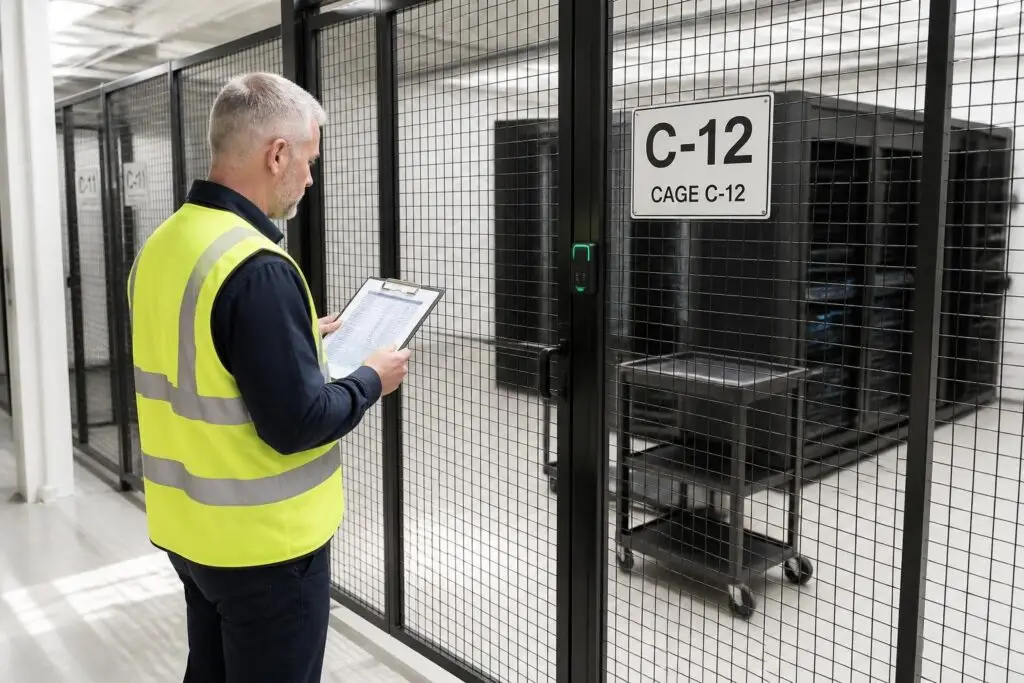
Treating server location as a true line item in your total cost of ownership model — with energy, transit, tax, and compliance costs mapped per region — is the only way to compare deployment options on an honest financial basis.
How to Factor Location Cost Into Your Total Cost of Ownership
Calculating the true total cost of ownership for a dedicated server means treating geography as a budget line, not a footnote. Every region-specific variable — energy pricing, transit costs, compliance overhead, and applicable taxes — must be mapped against the concrete performance value that region delivers for your specific workload. Without that mapping, you are comparing headline prices rather than real spend.
A cost matrix built before you request a single quote forces currency risk and renewal rates into the open where they belong.
A practical starting point is to build a simple cost matrix before you request a quote. List each candidate region in one column and assign a value to each of the following variables in the rows: estimated monthly base rate, bandwidth pricing tier, applicable tax rate, compliance add-ons required by that jurisdiction, and any cross-connect or interconnection fees relevant to your architecture. Then add a separate column for the latency benefit each region provides to your primary user base.
This forces an explicit trade-off: a lower base rate in a distant region may look attractive until transit costs and latency penalties are quantified alongside it. Two variables that buyers frequently underweight at this stage are currency exposure and renewal pricing.
Renewal rates can diverge from introductory pricing, meaning that a TCO calculation based only on the signup rate may understate later spending. Both currency exposure and renewal pricing should therefore be confirmed before signing. For the full cost structure beneath the advertised price — including management tiers, hardware generations, and bandwidth billing models — see Dedicated Server Hosting Pricing – What You Actually Pay.
How Data Center Location Variables Affect Dedicated Server Costs
| Criterion | power | cooling | connectivity |
|---|---|---|---|
| Regional electricity rate impact | Cheap hydro or renewable grids lower base plan pricing meaningfully | High cooling demand offsets low electricity rates in warm climates | Transit-heavy regions pay more regardless of local power costs |
| Cooling overhead contribution | Dense power draw raises cooling costs, compressing low-energy savings | Arid or cold climates reduce mechanical cooling spend for providers | Cooling costs are fixed overhead, not tied to bandwidth provisioning |
| Connectivity and transit pricing | Low power cost does not reduce edge-network bandwidth expenses | Cooling savings rarely offset premium transit fees in secondary markets | Proximity to internet exchange points lowers provider transit costs directly |
| Compliance and regulatory overhead | Jurisdictions with data residency rules add operational costs to power regions | Compliance certifications apply facility-wide, affecting all operational overhead | Cross-border data rules can restrict peering options, raising transit costs |
| Latency-driven location premium | Urban grid locations carry higher power costs alongside latency advantages | Core metro facilities pay more for cooling due to real estate density | Core network locations command pricing premiums tied to low-latency access |
Conclusion – Match Region to Budget Before You Commit
Geography is a pricing variable, not merely a performance preference. The region where your server sits determines energy costs, transit pricing, applicable taxes, compliance overhead, and interconnection fees — all of which accumulate on top of the headline monthly rate. A location that appears cost-efficient at first glance can carry a materially higher true spend once those layers are mapped against your specific workload, user base, and regulatory obligations.
The teams that avoid budget surprises are those that build a region-by-region cost matrix before requesting a quote, rather than after a contract is signed.