

Provisioning a dedicated server feels like a clean start – exclusive hardware, no shared tenants, full control. What many teams discover too late is that the IP address assigned to their new server carries a history they had no part in creating. If a previous tenant used the address to send spam, operate malicious infrastructure or generate abuse complaints, its reputation may already be impaired. Different email providers, security vendors and reputation services maintain separate datasets, so an address may be listed by some services while remaining unlisted by others. IP blacklist inheritance is one of the most underestimated due-diligence risks in dedicated server provisioning. Unlike hardware faults or misconfigured software, a flagged address is invisible until it causes damage.
The problem does not appear in the server specification. By the time it is discovered, outbound messages may already have been rejected, deferred or routed to spam. Confirm the rejecting system and its policy before attributing the failure to an IP listing.
Why IP Reputation Follows the Address, Not the Owner
Reputation systems may evaluate an individual IP address together with its surrounding prefix, ASN, associated domains, URLs and observed behaviour. Reassignment of an address does not automatically remove historical reputation data.
The mechanics work like this: reputation databases operated by email security networks, firewall intelligence feeds, and threat intelligence platforms record abuse events against the IP address as a unique identifier. They do not track ownership changes at the hosting level. A previous tenant who sent bulk unsolicited mail, operated malware distribution infrastructure, or triggered repeated authentication failures against external services leaves those records in place.
A reassigned address may retain existing reputation data until the relevant operator expires, reassesses or removes it. The process differs by service: some listings expire automatically, while others require remediation and a formal removal request.
What makes this particularly difficult to catch at provisioning time is that IP reputation data is distributed across dozens of independent databases, each maintained by a different organization with its own listing criteria and delisting procedures. A single address can appear on several simultaneously. Checking one registry and finding it clean does not mean the address is clean everywhere.
Certain databases also retain historical listings even after a formal delisting, flagging the address as "previously listed" – a signal that cautious mail servers and security appliances may still act on.
For teams provisioning dedicated hardware in regulated environments, the risk compounds further. A flagged address can disrupt outbound communication with partners, affect audit log delivery, and complicate compliance documentation in ways that go well beyond email deliverability. A structured pre-provisioning checklist – the kind covered in a dedicated server comparison guide – can turn this hidden risk into a routine due-diligence step rather than a post-incident discovery.

A credible IP reputation audit requires querying multiple registry categories in sequence, because no single blacklist database captures the full scope of an address's abuse history.
How to Discover Whether Your IP Address Is Already Flagged
Use several independent tools because email blocklists, network-reputation services and browser-safety systems cover different risks. The order is less important than identifying the service responsible for the operational impact and following its official process. A thorough audit covers email blacklists, network-level threat intelligence feeds, and browser or security vendor block lists. Each category is maintained independently, and an address can be flagged in one while appearing clean in another.
The severity of the listing – and the urgency of your response – depends on what the previous tenant actually did, not simply on how many registries responded.
Beyond email-focused blacklists, check your address against network reputation databases used by enterprise firewalls and intrusion prevention systems. These feeds operate separately from email security infrastructure and are queried by a different set of services. An address flagged at this layer may cause connection refusals from partner networks.
Some compliance frameworks treat outbound connection failures to regulated partners as an audit event, which means a flagged network reputation can surface in ways that are harder to explain than a bounced email.
Finally, query your address through a browser. Once you have a complete picture across all three layers, you can prioritize remediation by impact rather than reacting to whichever problem surfaces first.
What Types of Blacklists Actually Affect Your Operations
Not every blacklist carries equal weight, and treating them as interchangeable is one of the most common mistakes teams make after inheriting a flagged address. The operational impact of a listing depends entirely on which category of blacklist holds it and which downstream services query that category. Mapping these distinctions before you begin remediation saves time and prevents you from prioritizing the wrong problem.
A botnet registry listing can survive long after your email blacklist is cleared, so treat each category as a separate problem.
As noted under “How to Discover Whether Your IP Address Is Already Flagged,” identifying the responsible reputation service is only the first step. The listing category determines its likely operational impact and which operator controls its review process. Separate listings must be investigated independently because resolving one does not automatically remove another.
- Email-focused DNSBLs primarily affect mail acceptance and delivery; separate security systems may use other reputation data for web or API traffic
- Browser and security vendor block lists flag your IP in end-user tools, potentially warning visitors away from your site
- Spam URI registries list domains or URLs associated with your address, affecting deliverability even when the IP itself is not directly listed
- Botnet and malware distribution registries carry the heaviest downstream consequences and are the hardest to get removed from
- Each category is queried by different downstream services, so a listing in one may have zero impact on another
Email-focused DNS blacklists, commonly called DNSBLs, are queried by mail servers to filter inbound connections. A listing here affects outbound email delivery: newsletters fail to reach inboxes, transactional receipts land in spam folders, and partner communications bounce. The damage is real, but it is contained. A mail-specific listing primarily affects email delivery. It does not automatically affect web or API traffic, although separate security products may use related reputation data.
If your workload does not send email, an entry on a DNSBL is largely irrelevant to daily operations.
Enterprise firewalls, intrusion prevention systems, and cloud security gateways query these feeds to decide whether to accept or drop inbound connections at the packet level. Some security products or partner networks may reject traffic based on reputation data. Confirm the rejecting system and its policy before attributing a connection failure to an IP listing.
Diagnosing this type of block requires correlation across network logs, which is why it tends to surface late and cause disproportionate disruption. For teams handling financial transactions or operating under compliance frameworks, a block at this layer can interrupt audit log delivery or break integrations with regulated partners.
Browser and content-safety reputation services form a third, often overlooked category. These services can influence browser warnings and security products, but they are separate from email blocklists and must be investigated through their own diagnostic and review processes.
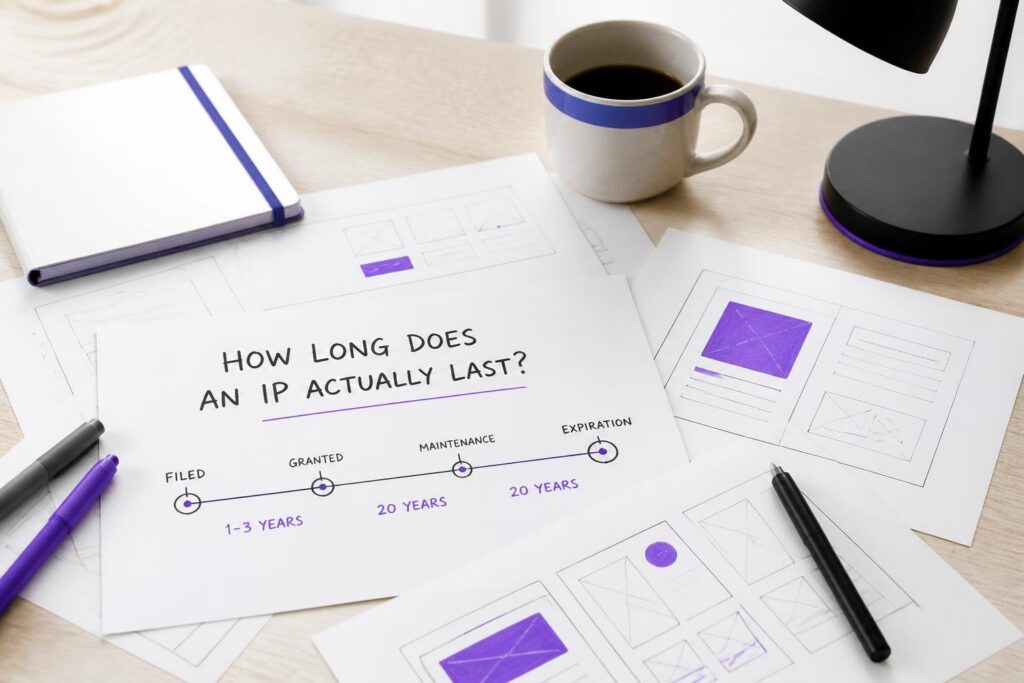
Assuming a blacklisting will expire on its own is a costly mistake, since delisting timelines are governed by registry-specific rules, abuse severity, and whether you actively submitted a remediation request.
How Long Does an IP Blacklisting Actually Last?
There is no reliable universal delisting timeframe. Use the status, expiry information and removal procedure published by the specific operator, and distinguish operator review time from DNS and downstream-cache propagation. Assuming that time alone will resolve a listing can cost weeks of degraded deliverability or blocked connections.
Some reputation services provide a public correction or review process, while others require contact through a support or abuse channel. Follow the operator’s documented procedure and do not assume that payment guarantees removal.
Submitting a formal delisting request through the registry’s official portal may shorten the process when the request includes evidence that the underlying abuse has been eliminated. An incomplete request may instead be rejected or delayed.
Review and propagation times vary by operator and listing type. Use the timeframe published by the specific reputation service rather than presenting a universal estimate. Some reputation systems consider network- or ASN-level history as well as the behaviour of an individual address. A clean record for the current tenant may therefore be relevant without being sufficient to produce immediate reclassification.
Some listings have no published automatic expiry. In those cases, follow the operator’s documented review or correction procedure and evaluate an address change if the unresolved listing continues to cause material operational harm.
Where an operator permits remediation requests, clear evidence of the corrective action can support the review. Requirements and processing times differ between operators.
The Remediation Path – Requesting Removal Without Making It Worse
After stopping the abusive activity, identify every relevant listing and follow each operator’s published removal procedure. Independent requests may be submitted in parallel when appropriate. Track each case separately and allow for DNS, cache and reputation-feed propagation before judging the result.
An incomplete request may be rejected or delayed, and repeated submissions can violate an operator’s process. Do not assume that a failed request automatically extends a listing or changes its classification unless the relevant operator explicitly states that rule.
The first principle is to resolve the underlying problem completely before touching any registry portal. If the previous tenant's abuse originated from an open mail relay, a misconfigured outbound port, or a compromised application layer, those vectors must be closed and verifiably inactive before you submit anything. Registries that process manual review requests – particularly those covering network-level threat intelligence – will ask for a remediation summary.
A remediation summary should identify the abuse source, the corrective action and when that action took effect. Avoid unsupported assurances and follow the evidence requirements published by the specific operator.
After stopping the abusive activity, identify each relevant listing and follow the operator’s published removal procedure. Independent requests may be submitted in parallel when appropriate, but each case must be documented and tracked separately. Allow for DNS, cache and reputation-feed propagation before judging the result.
Ask shortlisted providers directly about address assignment, reverse DNS, replacement procedures and abuse handling, and maintain IP-reputation monitoring independently.

When a subnet carries a severe enough abuse record, the realistic path forward shifts from pursuing removal to planning a controlled IP migration before the damage compounds further.
What Happens When Delisting Is Not a Practical Option
Delisting may be impractical when the operator provides no usable correction path, the published review process has been exhausted or the unresolved listing continues to cause material harm. In that situation, compare continued remediation with the operational cost of changing the address.
If the published review period expires without a response, follow the operator’s documented escalation process and compare further remediation with the operational cost of changing the address.
If the operator does not respond within its published review period, follow the documented escalation route if one exists. Do not infer an undocumented disqualification rule. Evaluate an address change when the unresolved listing continues to cause measurable operational harm.
When that situation arises, the practical path forward shifts from remediation to address substitution or augmentation. The most direct option is requesting an additional IP address from your provider and routing affected services through the clean address while the flagged one remains in reserve or is returned entirely.
Ask whether the provider can supply a replacement or additional address, which justification is required, whether charges apply and whether reverse DNS or routing changes will be necessary. A second option is requesting a full IP rotation – replacing the flagged address with a new one drawn from a different subnet. An address change requires updates to DNS records, reverse DNS, firewall rules, allowlists, monitoring targets, mail configuration and any hard-coded address references. Hostname-based TLS certificates usually remain valid, but certificate deployment and service bindings should still be tested on the replacement address.
The transition window, if not managed carefully, creates its own service disruption.
Neither approach eliminates the underlying risk if you remain with the same provider and the same address block. A subnet with a poor aggregate reputation can affect deliverability and access even for addresses within it that are individually clean – a pattern worth raising with your provider before committing to a replacement address from the same range.
Can You Prevent Inheriting a Flagged IP at Provisioning Time?
A pre-deployment reputation check is possible once the provider has assigned or disclosed the address. Some providers will not disclose an address before provisioning, so include an address-replacement procedure in the contract or order terms when reputation is business-critical.
- Request the address before acceptance where the provider’s provisioning process permits it. If advance disclosure is unavailable, require a defined post-provisioning reputation check and replacement procedure
- If active listings appear, ask the provider for a different address drawn from a clean subnet
- Where IP reputation is business-critical, negotiate a replacement commitment tied to named reputation services and defined material listings. Specify the verification method, response time and replacement procedure
- Check the broader subnet range, not just the single assigned address, to identify neighbourhood reputation risk
- Treat the assigned IP as a decision point to evaluate, not a routine technical detail to accept automatically
Request the address before acceptance where the provider’s provisioning process permits it. If advance disclosure is unavailable, require a defined post-provisioning reputation check and replacement procedure.
If the results show active listings, you have two clear options: ask for a different address from a clean subnet, or negotiate a contractual clause that obligates the provider to substitute a clean address within a defined timeframe if a listing is confirmed at handover. Neither request is unreasonable, and a provider's willingness to accommodate it is itself a signal about how they manage their IP space.
The contractual angle matters more than buyers realize. Pre-provisioning IP warranty language – a clause specifying that the assigned address will be free of active blacklist entries at the time of delivery – can provide recourse if the assigned address has an existing material reputation problem. Define which reputation services qualify, the verification method and the time allowed for replacement. Without it, the burden of remediation falls entirely on you, even though the history predates your tenancy.
Some providers include this implicitly in their service agreements; others do not address it at all, which means you must raise it explicitly before signing.
For teams that need a repeatable process, document the reputation services to be checked, the acceptance criteria, the provider escalation contact and the address-replacement procedure before deployment.

Reputation can change after new abuse reports or suspicious traffic are detected. Treat IP reputation as a continuous operational metric rather than a one-time provisioning check.
Ongoing Monitoring – Catching a New Listing Before It Causes Damage
Reputation can change after new abuse reports or suspicious traffic are detected. Monitor the assigned address and, where relevant, its surrounding prefix. Prefix-level monitoring provides additional context but does not predict whether the individual address will be listed.
By the time a customer reports a bounced email or a partner flags blocked traffic, the entry may already have propagated to secondary databases, compounding the remediation effort significantly.
The practical answer is lightweight, automated alerting rather than periodic manual checks. Monitoring services can query selected reputation lists on a schedule and alert when a checked source reports a new listing. Coverage and detection delay depend on the service and polling interval. Implementation effort depends on the number of addresses, monitoring service, authentication method and alerting integration.
Correlate any new listing alert with your server’s outbound traffic logs from the same time window.
Correlate the listing time with outbound traffic, mail logs, authentication events and abuse reports. A traffic spike is evidence for investigation, not proof of compromise or misconfiguration.
Timestamped listing alerts and correlated traffic logs provide evidence that can be included in a provider support request.
Use the provider comparison to create a provider shortlist, then ask each shortlisted provider about address assignment, reverse DNS, abuse handling and replacement procedures. Configure reputation monitoring independently after deployment.
Conclusion – Act Early, Audit First, Migrate Wisely
An inherited IP blacklist entry is not a catastrophic problem, but it is a precise one. The teams that resolve it quickly are those who discovered the issue before going live, documented the history clearly, and engaged their provider with timestamped evidence rather than vague complaints. The teams that struggle are those who assumed a clean slate came with the hardware.
Teams that inherit clean reputations earn them through pre-provisioning audits, not by assuming the hardware arrived spotless.
The gap between those two outcomes is almost entirely a matter of preparation: running a pre-provisioning check, requesting a warranty clause, and setting up automated monitoring before the first production packet leaves the server.